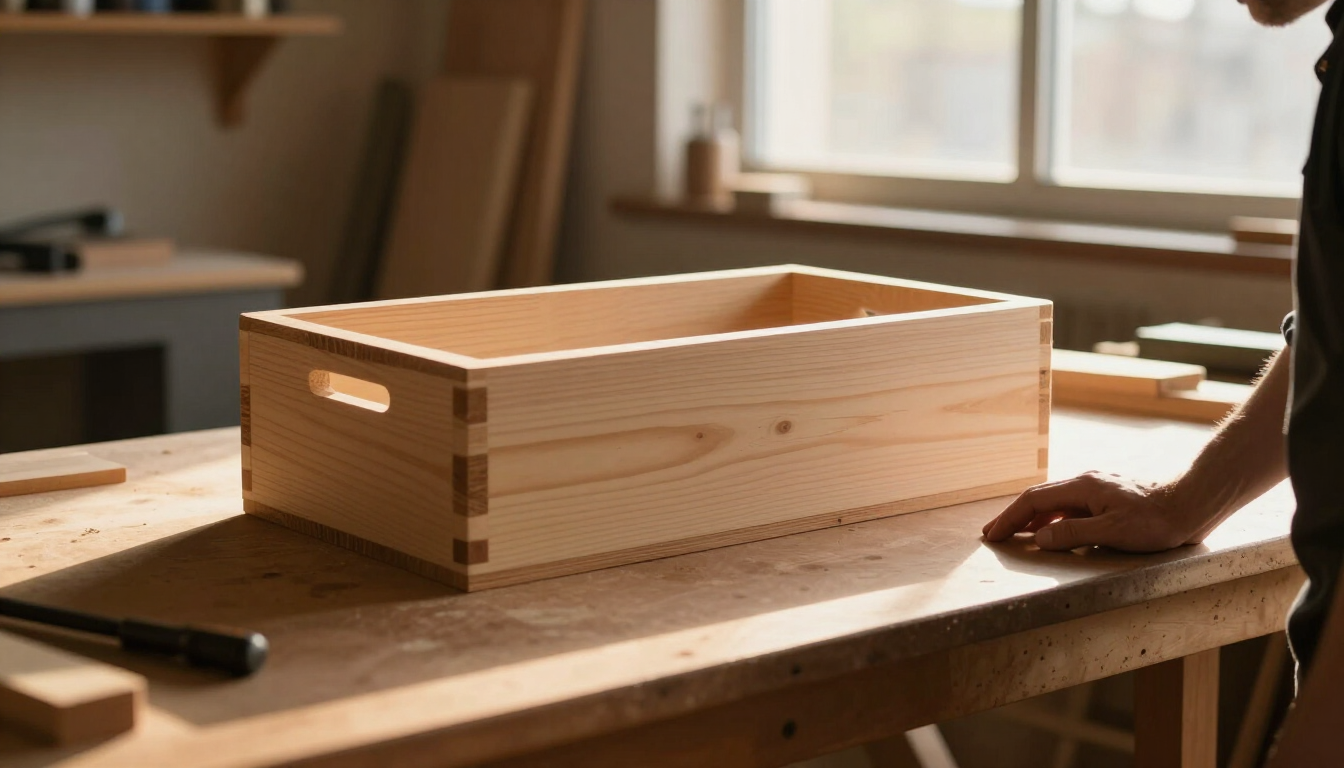
10 Common Woodworking Mistakes Beginners Should Avoid
Everyone makes mistakes when learning woodworking.
The goal isn’t to avoid every mistake. It’s to learn from them and avoid repeating the expensive ones.
Many beginner woodworking problems aren’t caused by a lack of talent. They’re caused by rushing, inaccurate measurements, poor planning, or using the wrong tool for the job — the same fundamentals covered in our guide to the essential woodworking tools every beginner should own.
Here are ten common woodworking mistakes and how to avoid them.
1. Skipping the Planning Stage
Starting to cut wood before you have a clear plan can lead to wasted materials.
Before beginning, create a simple drawing and list the dimensions of each component. A few minutes with a pencil and a cut list — the same habit our guide to reading woodworking plans teaches — saves a second trip to the lumber yard.
2. Measuring Only Once
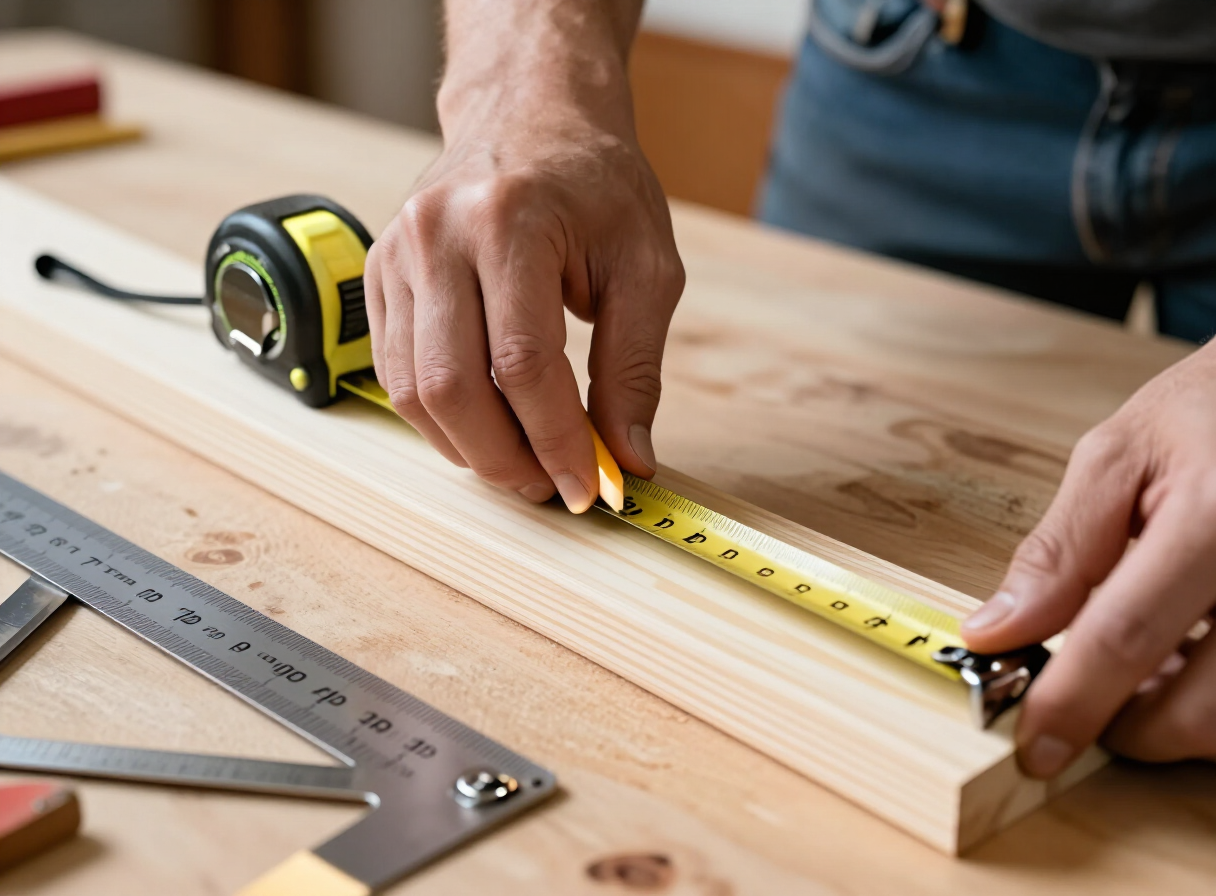
The old saying “measure twice, cut once” remains useful.
Double-check measurements before making permanent cuts. A small measurement error can affect the entire project — and ripple through every piece you build afterward.
3. Ignoring Wood Movement
Wood is a natural material and responds to changes in moisture.
Large furniture projects need construction methods that account for this movement. Don’t treat every wooden component as if it were completely dimensionally stable — our guide to choosing the right wood for DIY projects explains how different species behave.
4. Using Dull Blades
A dull blade can produce poor cuts and make tools harder to control.
Keep cutting tools maintained and replace or sharpen them appropriately. A sharp tool is also a safer tool — it cuts where you aim it instead of forcing you to push harder.
5. Skipping Pilot Holes
Driving screws directly into certain types of wood can cause splitting.
Pilot holes can help reduce this risk, particularly near board ends. It takes ten seconds and saves a board that took ten minutes to cut.
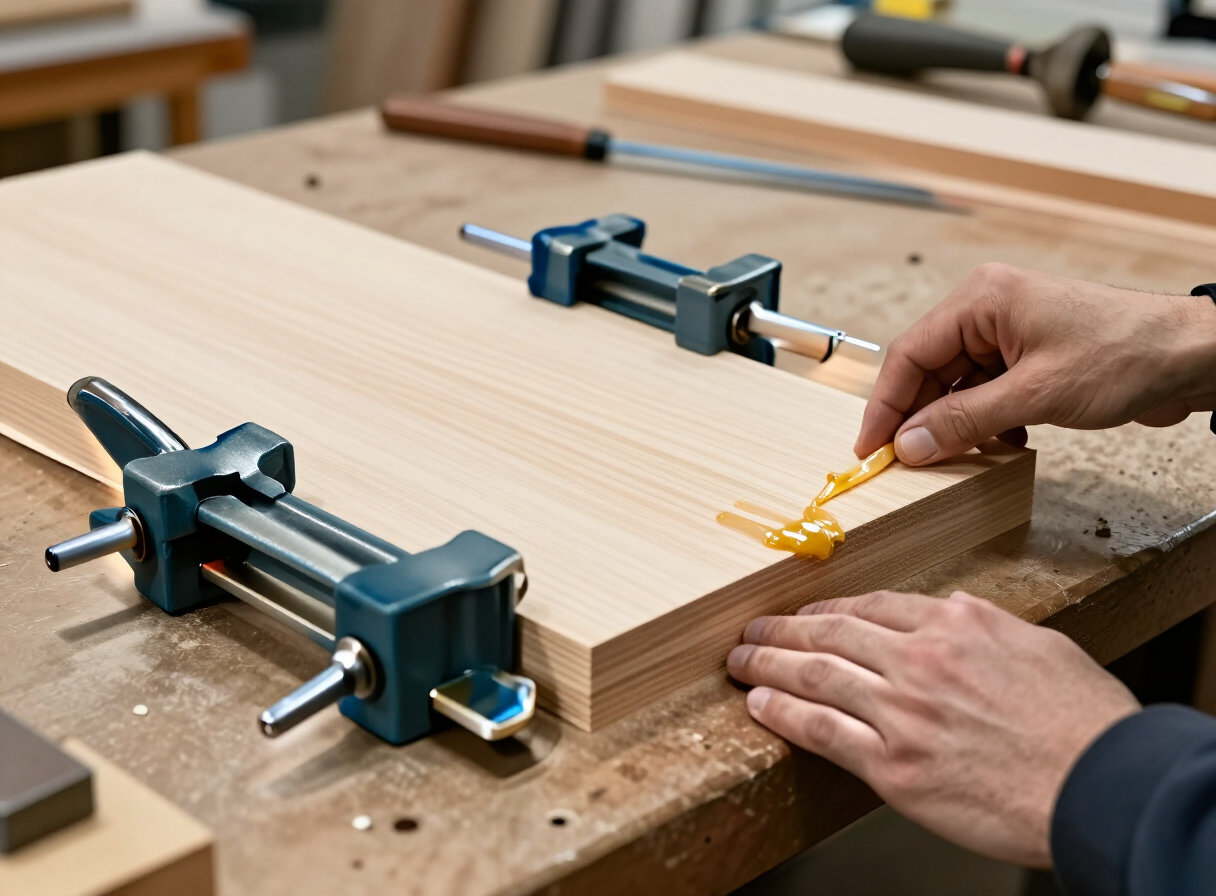
6. Not Using Clamps
Trying to hold boards together by hand while fastening them often results in misaligned joints.
Clamps provide stability and allow you to focus on making accurate connections. You will never own enough clamps — buy them in pairs as your projects grow.
7. Rushing the Sanding Process
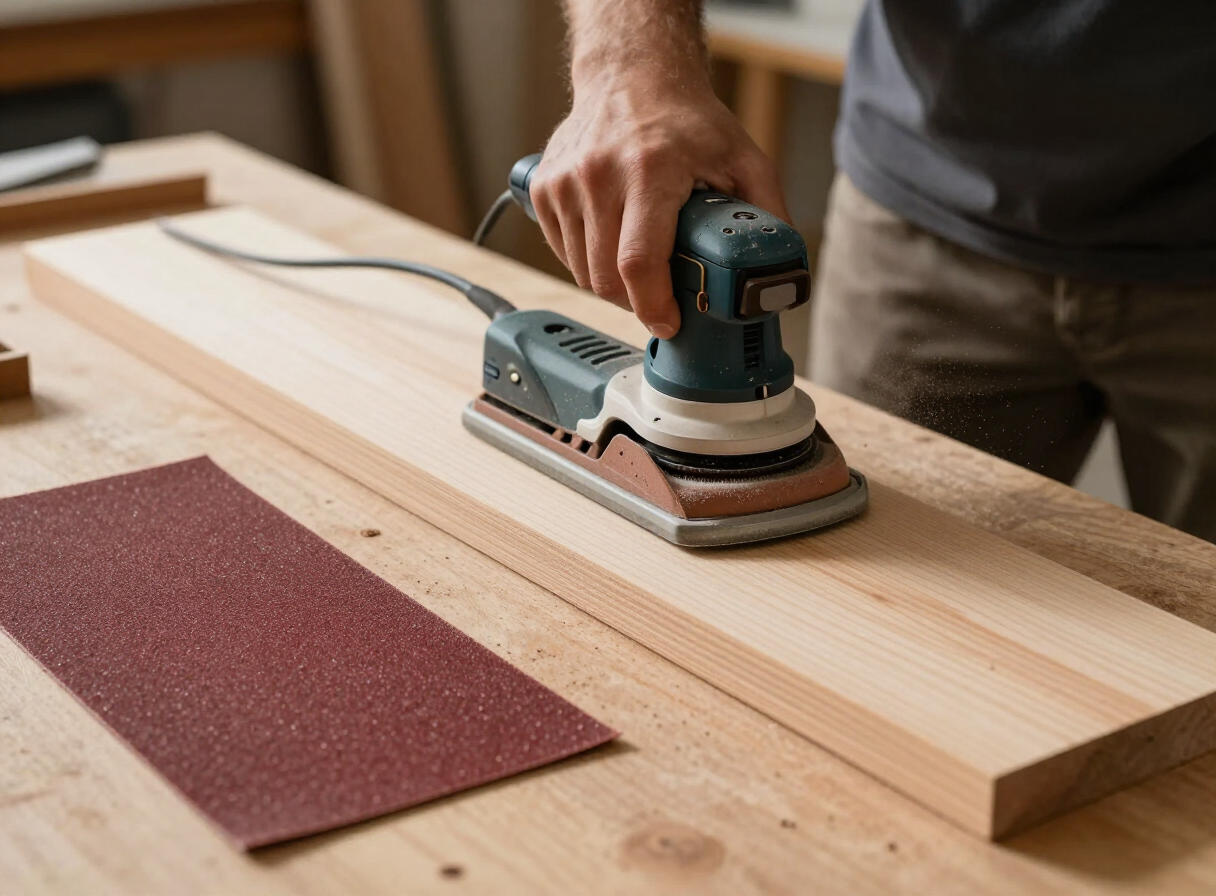
Sanding isn’t the most exciting part of woodworking, but it has a huge effect on the final result.
Start with an appropriate grit and progress gradually. Don’t expect a single pass with fine sandpaper to fix deep scratches — our complete wood sanding guide walks through grit selection, sanding blocks, and inspection in detail.
8. Applying Finish Without Testing
Different woods react differently to stains and finishes.
Always test your finishing process on scrap material whenever possible. The color you see in a container isn’t necessarily the final appearance on your wood — pine in particular can blotch badly without a pre-stain conditioner.
9. Buying Tools Before Projects
It’s easy to spend a lot of money collecting tools.
Instead, choose projects first and purchase tools according to your actual needs. This keeps woodworking affordable and prevents your workshop from filling with tools you rarely use — start with the ten essential tools and add more only when a project demands them.
10. Ignoring Safety
Safety should never be treated as an afterthought.
Understand your tools before using them. Wear appropriate protective equipment and follow manufacturer instructions. Never sacrifice safe working practices simply to save a few minutes — a well-organized small workshop with good lighting and dust management is part of staying safe too, and our 10 essential woodworking safety tips for beginners cover the rest.
What If You Make a Mistake?
Don’t immediately throw the project away. Some mistakes can be repaired.
A slightly incorrect cut may be shortened or redesigned. A rough surface can often be sanded. A small gap may sometimes be addressed through appropriate joinery or design changes.
Woodworking teaches problem-solving. Some of the best-loved pieces in a workshop started as a mistake that found a second life.
Learn From Every Project
After finishing a project, ask yourself:
- What went well?
- What would I change?
- Which measurement caused problems?
- Which tool would make the next project easier?
- What did I learn?
Keeping notes can accelerate your progress. A simple notebook beside your workbench turns every build into a lesson for the next one.
Final Thoughts
Mistakes are part of becoming a better woodworker.
The important thing is to slow down, plan carefully, check your measurements, use appropriate tools, and learn from every project.
Your first project probably won’t be perfect. That’s okay. Your tenth project will be better because you built the first nine — so pick a forgiving first build from our 15 easy beginner projects and get started.